Friday, June 10, 2011

Treasures and Pleasures Close to Home


I like walking around my new neighborhood, gaining familiarity, discovering new things. So many treasures and pleasures. Among them are the beautiful flowers that bloom in profusion: iris, poppies, roses, peonies, in wonderful variety and colors, some delicate as veils, others sturdy as metal. Every house, every building and yard, has something blooming, perennials flourishing and annuals tastefully filling in around them. Just like in Starobelsk, and Luba's and Natalia's gardens.

Sylvania is not only green, it’s also red, thanks to the foresight of early civic leaders who planted lots of red maples. Beautiful trees. Main Street and the neighborhoods around it are lined with them, graceful deep red leaves swaying in the breezes against blue skies.

Sylvania is noted as well for its many small businesses that beckon us to “shop locally.” Antique stores and home furnishing shops predominate, chock full of lovely things and sweet-smelling candles and incense. Other favorites are the Angel Store and Harmony in Life, where you can buy treasures for the soul, an angel for your walls, take a yoga class, get a massage, inhale and exhale, relax and enjoy.

There’s a variety of nice restaurants, too: the Dragonfly Tea Room, a pretty Victorian haven for lunch, brunch , or tea; Chandler’s, J&G’s and Jenna’s, inside or outside, great for lunch and informal meals. Treo’s with it’s white tablecloths, candles and flowers, for more fancy dinners. Outdoor tables and chairs along the street and in front of shops welcome guests and provide resting places and public spaces for chatting with neighbors and shoppers.

The town’s recent ”paint a planter” competition has resulted in brightly painted large flower pots along Main Street, complementing the painted benches, adding to the ambience. It’s like a touch of Mexico, full of color and charm.

Recently I discovered some new attractions: The Limelight, for gifts; First Impressions for homemade art cards, invitations and notes for every occasion; and the grounds of the Historical Museum and village, behind the historic house. A gazebo graces a lovely garden, a favorite site for birds and rabbits as well as human visitors.

Today the Historical village hosted the annual Art Festival, with over 30 tables and booths featuring arts and crafts by local artists. I stopped by, bought a piece of outdoor art for our little garden, took a tour of the historic house (the former home of Dr. Cooke and his family), and met several board members. I plan to go back for programs and learn more about Sylvania history. (I also noticed that the House's papers are contained in several files, and it would probably be good to digitize the collection, to preserve it for posterity, but I didn't say much).

Life’s s simple pleasures here, as in Starobelsk, my village in Ukraine, feed the spirit, restore the soul. It doesn’t matter where you are, if you are fully present where your feet are planted. Life is good!

Wednesday, June 8, 2011

Afterglow


My neighbor Judi’s sister is dying; she's under hospice care now. She has stopped eating, mostly sleeps, awakens every now and then with a smile to see her sisters, including those from Massachusetts, around her. She is at death’s door.

I brought Judi a pasta salad today so she can eat on the go; she gave me a Hospice book, “Gone from My Sight,” about the dying experience, which I had said I was interested in. I put down my Digest of Ohio Motor Vehicle Laws to browse through it.

The booklet, by Barbara Karnes, RN, opens: “Death comes in its own time, in its own way. Death is as unique as the individual who is experiencing it.” She then gives the signs of death, from withdrawal to having no interest in food, to sleeping most of the time; “going inward” she calls it. “Words lose their importance,“ she says, and “a different kind of energy is needed, a spiritual energy rather than physical energy.”

This all makes sense. It happened with my dad, with my mom, although I was ignorant of death and signs of it. I don’t know how it was for my brother (that grieves me), or if he recognized the signs of death, or the tremendous stress on his body from being overweight and out of shape. I have some books about death and dying next to my bed, but haven't read them yet. Not when I’m in the middle of Steig Larsson’s The Girl with the Dragon Tattoo, and also John Grisham’s fun novel Playing for Pizza.

Maybe I need to get my priorities straight! Actually, I do find myself collecting some nice things that can be said at one’s funeral, anyone's funeral. Here’s one, for example, that my sister Andy and her daughter Ali chose for my brother’s memorial gathering.

Afterglow (photo above right)
I’d like the memory of me
To be a happy one. I’d like
To leave an afterglow of smiles
When day is done. I’d like
To leave an echo. . .
Whispering softly down
the ways of laughing times
and bright and sunny days.
I’d like the tears of those
Who grieve to dry before
The sun of happy memories
that I leave behind
When day is done.


Very nice, I think. I don’t know the author, but the thoughts are upbeat, and the concept of "Afterglow" is wonderful. I think Loren liked this.

There are also several poems that begin: “I’m Free.” And there’s “A Scot’s Farewell,” which can be a comforting farewell for a person of any ethnic background who comes "to the end of the road."

A Scot’s Farewell
When I come to the end of the road
And the sun has set for me
I want no tears in a gloom-filled room
Why cry for a soul set free?
Miss me a little but not for long
And not with your head bowed low
Remember the love that we once shared.
Miss me…but let me go.

For this is a journey we all must take
And each must go alone.
It’s all a part of the master plan
A step on the road to home.

When you are lonely and sick of heart
Go to the friend we know
And bury your sorrows in doing good deeds.
Miss me…but let me go.

No author here either, but I like this one. Straightforward, honest, hopeful. Let me go. Do good deeds. Life goes on.

Judi’s sister’s body, her physical presence, is at the end of the road, her soul on its way to a new place, wherever that may be. It’s hardest on the loved ones, but I find comfort in these words of wisdom, and in the idea of a soul set free.

Tuesday, June 7, 2011

Ukrainian-Toledo Connections

Olga traveling (above); Luba with friends and flowers; Vera and Vova at a protest (left).

The Toledo-Ukraine connection continues. I love emailing my friends in Starobelsk, and hearing from them in return. We exchange news and photos. Now they are enjoying photos of my great-grandson Philip’s 4th birthday party. Facebook is also a good way to stay connected.

I don’t know what life will bring, if I will ever return to Starobelsk, whether friends from there will ever be able to visit me in the States. But I will always remember, and so will they.

The bonds are strong across time and place, language and culture. I’d Skype but my Russian is getting worse and worse the longer I don’t hear the language, or communicate. It’s frustrating; better to email. When I can get a translator to Skype with me, I’ll do it for sure.

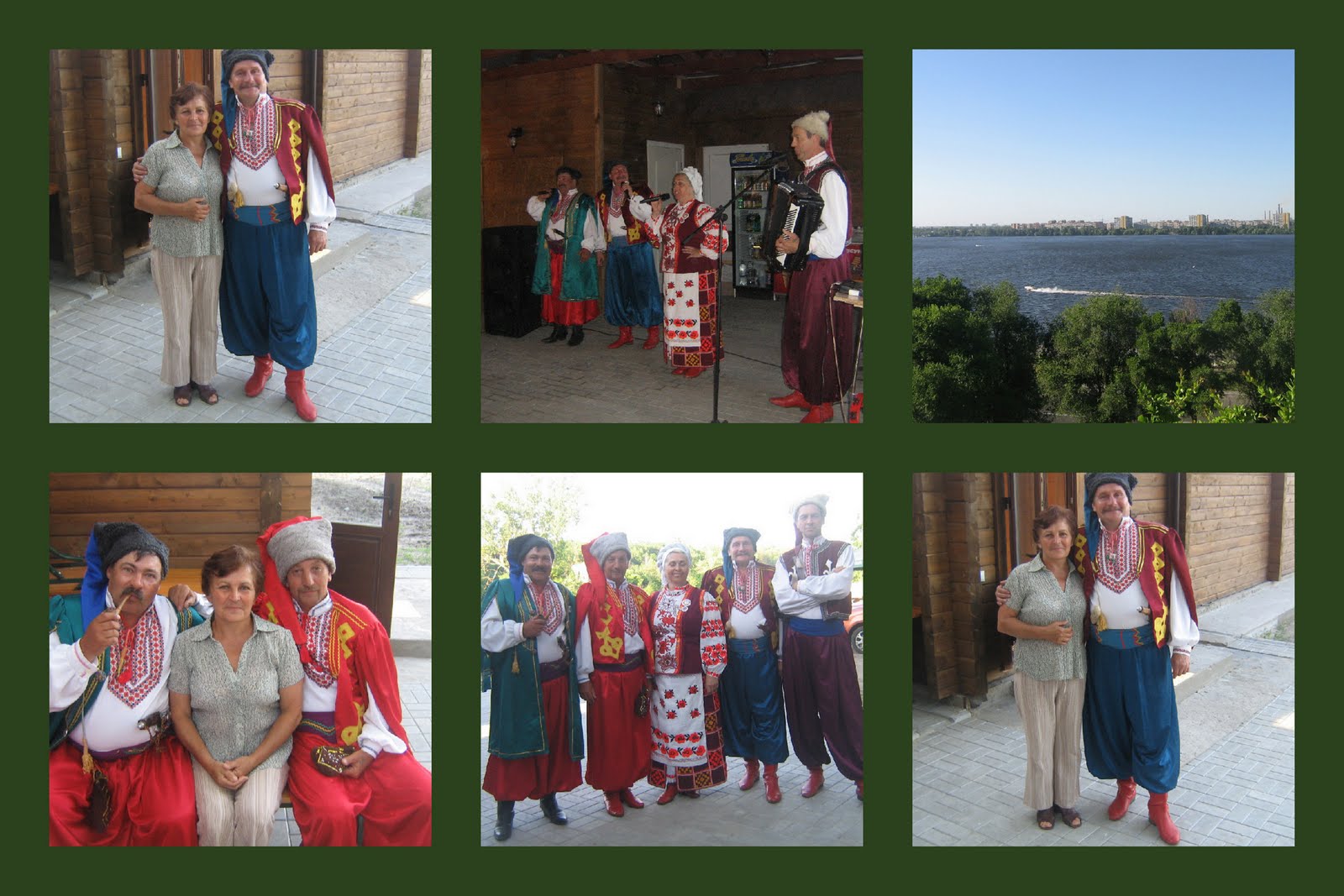
Here, above, are a few photos of friend Olga who was with Vera, director of Victoria NGO, in Dnepropetrovsk, attending a training seminar and enjoying the city on the Dnieper river, its sights and sounds, its nature and culture. It was once a center of the Soviet Union's defense and space industries; it's now becoming a tourism destination, promoting its beautiful historic sites and churches, plus a great public transportation system.

The collage also shows Olga enjoying a concert with a traditional Ukrainian band, and it’s just like her to befriend them. She is a one-woman cross-cultural band herself! She led our great adventure to the Carpathian mountains, to Lviv and her friends Stefan and Bogdan, and later to Prague and the exquisite little towns around it.


Vera Flyat continues her human rights work and her commitment to social change from the bottom up (left, Vera in center, and friend Vovo Shecherchenko, lower left corner), at an anti-corruption protest. She is a dynamo. So is Vovo, head of the East Ukraine Center for Civil Initatives. They are Ukraine's future leaders. Они Украины будущие лидеры.

Back in Starobelsk (photos to right), Luba and Irina, and friends Tonya and Luda, get together often, enjoying meals and toasts using the Florida shot glasses I gave them. Those turned out to be the best souvenirs I brought with me to Ukraine, and I had to get refills a few times! Here's to Florida, to the Ukraine, to us!

Life is often hard for Luba and her friends, with businesses suffering, the economy broken, Sergei’s situation tragic, and Luba with a broken wrist on top of a broken heart. But these are resourceful women, incredibly hard workers, and they know how to have fun even in the worst of times. We share a love of flowers, so I am always happy to see roses from Luba’s garden. She’s having a rough time now, but I pray her cast will come off soon and that she will be working in her garden again, her refuge and solace.

Once a PCV always a PCV. The friendships we make are special and enduring. The ties that bind are strong. We leave a small legacy behind, but we receive so much more than we can ever give. PCVs are warriors for peace. We don't carry guns, but we advance the cause through cross-cultural understanding, grassroots work, and many personal friendships. These connections, the very essence of a PCV's work, lay the groundwork for peaceful relations and social change, one small step at a time.

Sunday, June 5, 2011

Wonder-filled Whirlwind Weekend

Old West End Festival and our old homestead at 2448 Robinwood (yellow & green with distinctive porch railing, and interior with fabulous woodwork). Below the collage: Josh and Kyle's tent; Philip's 4th at Wildwood park; matriarch Roz and our family.


This was a great post-PCV weekend. The adventures are piling up faster than in Ukraine!

First the kids and I went to the Old West End (OWE) Festival and visited our family home at 2448 Robinwood, where Elissa and Michelle grew up. The house looks better than ever, inside and out, and the flowers and gardens I planted over 25 years ago are still flourishing. The people who live there now (there have been several different owners and occupants over the years) love it as much as we did, and they were glad to let us take a tour. The OWE festival began in the late 1960s when the neighborhood of fabulous Victorian homes was rebounding from hard times. The festival showcases the OWE’s historic architecture and pride of place. A walk down memory lane for me, and lots of lawn sales for the kids.

That night Josh and Kyle spent the night at my place. They built a great fort in the living room, with every sheet, blanket and chair we could gather together. They stayed up late, but what the heck! It was a great adventure.

On Sunday we all went to Wildwood Park, one of Toledo’s great Metroparks, for Philip’s 4th birthday party. It was a beautiful sunny day, not quite as hot as on Saturday. Friends from Philip’s pre-school and church and lots of family members on all sides gathered to enjoy pizza, cake, sing happy birthday and give him lots of presents. Boy did he have fun with that, helped by his cousin Aiden, whose birthday is coming up next month. Good thing, because those presents were fantastic! Mama Julia, my firstborn grandchild, did a great job of organizing the party, and keeping track of who gave what to Philip. What a party planner, to her mom’s (my daughter’s) delight, because an organizer Elissa is not! Creative and talented and wonderful, but not an organizer, as she freely admits. The family joke is that Julia inherited that gene from her Nana, and it skips generations.

And speaking of generations, with Roz Soldinger present, the 94-year-old family matriarch, we were five generations gathered to celebrate the birthday of the youngest, newest generation. A diverse, extended family united by the joy of Philip's 4th birthday. That's amazing!


Thursday, June 2, 2011

St. Patrick's Historic Catholic Church, Toledo, Ohio


I could be in Krakow, Poland, admiring the magnificent Saint Mary’s Cathedral, where Pope John Paul preached, or in Prague, Lviv, Budapest or Rome, Italy. But I am in old downtown Toledo, Ohio, marveling at St. Patrick’s Historic Catholic Church, one of the oldest in the city. I’ve passed it many times, taking my daughter to and from work. Today I stopped in to take a closer look.

It’s a Gothic cathedral, in the European tradition, smaller but as grand as any I've seen around the world. It has a magnificent 240 foot spire, a complex cylander-shaped beamed ceiling supported by marble columns, a stunning nave, detailed carvings and an elegant entryway, and at least 10 stained glass windows. The church goes back to the early 1860s and the founding of the city. Fire destroyed the original site in the early 1860s; construction on the present church began in 1892.

Today St. Patrick’s is surrounded by public housing, warehouses, industrial sites and trashy lots. It’s seen fire and rain, dwindling numbers of parishioners, urban blight and neighborhood deterioration. It has survived every tragedy to emerge stronger than ever.

After a 1980 fire, the grand copper-domed steeple was rebuilt, soaring into the heavens, summoning the guardian angels who have protected it through the ages. The church has a new terrazzo tile floor inlaid here and there with Irish shamrocks, testimony to its Irish Catholic roots in mid-nineteenth century Toledo. It has a new organ and, as important, strong organizational support, a preservation committee, well-attended weekly services and a myriad of activities. A firefighters’ memorial adds an important element to the church's interior, and reflects St. Patrick's ongoing commitment to the city's workers.

Irish immigrants “built the city from the bottom up,” one history says. They came to the Midwest hoping to farm, but ended up working as laborers. The Irish built the Miami and Erie Canals, then the railroads. They may have been “more interested in saloons than in churches,” as a church historian puts it, but the Irish newcomers, here as elsewhere, built their community around the church. It was their centerpiece, their refuge and salvation. Irish women, who worked as maids or in domestic services, made sure of it.

St. Patrick’s glistens in the summer sun against a blue sky and floating clouds. It looks peaceful and elegant, an oasis in an ever-changing urban landscape. Through good times and bad, St. Patrick’s has remained a steadfast sentinel to persistence and to Toledo’s Irish heritage and early history.

Wednesday, June 1, 2011

Anchored


Casa de Mama and the gathering table.

I just unpacked the last box। Whew! The movers came a week ago। It was the day after our memorable road trip through West Virginia, “almost heaven," where Loren’s car died on the one-year anniversary of his death. It’s been a kind of non-stop emotional roller-coaster ever since. Well, actually it began when I had to leave Ukraine in early March. I’ve been going like the energizer bunny.

This past week I've discovered what I left behind two years ago. How easy to forget it all. The furniture, art, possessions, the books, tons of books, an historian’s galaxy. I piled the last 8 boxes (there were over 50) in my closet today because I ran out of book shelves, having left a couple in St. Petersburg. I put some of the books in a box to give to charity.

I've found a place for all my furniture, even things I thought I didn’t want or could live without, like my mother’s French provincial curio cabinet, several old chairs, two bureaus, lots of books and artwork।

This apartment has two large rooms, plus a kitchen, bathroom, nice hallway, and little back porch atop a rickety flight of steep stairs that I use to get in and out. There’s another set of stairs I can use on the side of the house. I have stuff in that little porch. Elissa calls it a “mud room,” but it’s a pretty fancy mud room with that curio cabinet in it! I added a few paintings, too, including a classic poster for the Puccini opera “Madama Butterfly.” My mom sang the arias from that opera, which I loved, sweet and romantic. I called my mom Madama Butterfly. I still think of her that way. They are all together in that little porch space.

How many memories flew out of the dozens of boxes I unpacked, not to mention hundreds of mom’s photo albums and mine from the time my kids were born. Plastic storage boxes filled with momentoes and memories.

I’ve used every bit of space. I’m good at getting lots of stuff into small spaces, a skill that developed when I had an apartment in the Cairo Condo in Washington, DC. Minimalist my style is NOT. I have too much stuff. Eclectic it is, and colorful, bright, bold colors. The walls show it as well, filled with paintings and art, mostly from Mexico, plus four “abstract” works by Mike Adams, my daughter Michelle’s partner.

The most important piece of furniture I have is the large glass dining table in the living room, donated by my daughter Elissa. I wouldn’t give it up for anything. It’s become the family table, the gathering place. It’s in front of a large bay window overlooking the roof tops and trees of Main Street Sylvania. Four of my grandkids can sit on the window seat so we can all squeeze around the table. It’s in constant use. What a joy!

The next most important thing is a little treasure chest of toys that I began years ago, when my first grandkids Julia and Tony were born. I filled it with a variety of dolls, toy cars, games, stuffed animals, puzzles, cards, magnets, coloring books and crayons, and special items I knew they’d like, like souvenirs from my travels. Whenever things disappeared, I added new stuff. All my grandkids went straight for that treasure box, “hidden” under my bed, whenever they came to visit me, wherever I was. Now my great-grandson Philip has discovered the box that I created for my first-born grandchild Julia, his mom! Four generations enjoying a box of little surprises.
When I was a PCV in Ukraine I lived in one room with a bed, desk, and chair. It was all I needed. I think I could do with very few possessions, although what I have adds color to my life, and to that of my kids, who love being surrounded by Casa de Mama. The dining room table and the treasure box would be things I would keep. The rest could go, WILL go, one day. For now, my furnished apartment is a haven, a gathering place, a family home. I’m anchored.

Mike Adams' Art


My first photos (below) did not do justice to the art, especially their layered three-dimensional depth. So I tried again, at an angle and without flash. It's a little better. This is a small sample of a diverse body of work.


Mike Adam's art decorates my new apartment. Some of it. His crowded studio room overflows with his work, art upon art, “non-objective abstract three-dimensional art,” he calls it. I say it’s beautiful but he corrects me: “beautiful” it isn’t. Yes, I see what he means. Beautifully executed, beautiful colors, beautiful ideas, but more complicated than merely “beautiful.”

Mike's multi-varied art is detailed, emotional, layered, inspired. It's rhythmic, too, like music on canvas, or like a pumping heart. Sometimes it's tortured, like the complicated wiring of a brain on overload; sometimes peaceful, like a respite for the afflicted in a serene garden; sometimes both in the same piece of work, always the complex interior world of this talented artist.

Mike Adams is my daughter Michelle’s partner. They’re having a baby boy, Chase, in September. In preparation, Mike has painted a large, beautiful, oops, I mean stunning and dramatic, mural for his first child. It’s like a large colorful map for a child’s journey, full of animals and symbols, paths and byways, imagination and hope. It pays homage to Michelle’s other three children, too, Alli, Josh, and Kyle, part of a growing Adams and Cary clan in Sylvania, Ohio.

Mike also experiments with clay, watercolor, figurative painting. He is full of ideas. Sometimes his body doesn’t cooperate, his MS takes a hold, but he paints through the pain and the agony. He puts it on canvas for us to witness. When I view Mike's paintings I see, for the first time, what MS is like, what it is like for him, what it was like for my cousins Skip and Maria.

As complicated as Mike's work is, a viewer is drawn in, and this even though the art sometimes pushes us away. “Beautiful it isn't.” Multi-layered, bold, sensitive, masterful and meaningful it is.

Mike's art opens a whole new world. I hope he continues to paint and exhibit (and organize and put up a website) after Chase is born, although he is looking forward to being a full-time dad. I don’t see how he could stop his art, though. It’s in his blood, his veins, his arteries, his wiring, his heart. "It is who I am," he says simply.


Don't get out the popcorn yet: The Wheels of Justice Grind Slowly

"Delay, Delay, Delay: From pre-trial motions to negotiations over security, the master of legal stalling has many tactics in his arsena...