Wednesday, June 12, 2013

Cyber Thriller

Reuters image on Yahoo.
“I don’t understand why so few people seem to care or fear these invasions of privacy.”

My friend Ilse is talking about the current government spying scandal let lose by NSA (National Security Agency) consultant and whistleblower Edward Snowden.  The government has been monitoring our phone and internet data with the help of Google, Facebook, Verizon and other communications giants, he claims. Big Government and Big Business are in cahoots to spy on Americans.

I guess it’s just not surprising.  I must say I’ve been pretty nonchalant about it.  Maybe my expectations are low.  Nor am I surprised that NSA could be so invasive --  not because I keep track of security issues, but from watching that movie I’ve been referencing a lot lately, “Enemy of the State,” with Will Smith and Gene Hackman.   

yahoo image, movies.com
Smith’s character, a DC lawyer, inadvertently but decisively becomes the target of an NSA official who uses the full force of the government’s surveilliance power to get him.  It’s a thriller with a message: the US government has the capability and the willingness to strip our identity and spy on us, no matter where or when or how or why, and there is no stopping it. Unless that is you are a super genius cyber guru like Gene Hackman.
Not only that, but NSA can act on it’s own, without oversight, and let it rip, from spying to murder and mayhem. 

If this was the 1950s and the throes of the Cold War we might all be heading for bomb shelters.  Now we tweet and post messages about it on facebook and other social media. “What a shame,” we say, knowing there’s not much we can do, and hoping maybe the government can do better. We know darn well that Google and facebook et al know all about us, down to our daily purchases and every click we make on the computer.  

Why aren’t we angry and scared and screaming about this espionage exposure scandal? Could it be because we expect it? Is it because “the Millennials,” which is my grandkids’ generation, don’t see it as a problem?  Do they blithely trade privacy for the goodies of their smart phones?  Heck they are growing up totally wired and cyber savvy.  Even my youngest grandson Chase, approaching two-years-old, loves playing on his brother Josh’s iphone and yes, games on the computer.  He points and clicks with ease, and a big grin on his face. Don’t know what comes after the millennials, but Chase is right there. Also my 6-year-old great-grandson Philip. The Cyber Generation I’d call them.

Meanwhile the government is pursuing Ed Snowden, now in Hong Kong.  Like it did the Will Smith character in Enemy of the State. Why? What did he do wrong?  Snowden says he’s in Hong Kong not to hide from justice but to expose criminality.  “I’m neither traitor nor hero. I’m an American.”  He spilled to the British Guardian and the Washington Post.  Did he make this stuff up?   

Sounds plausible to me, but then I don’t know if we’re in a thriller movie or in real life and real time.

The president is reviewing the matter. The FBI and CIA are in on it. The director of NSA, Keith Alexander, will be questioned by Congressional committees I read.  He is, by the way, also head of something I had never heard of before, “US Cyber Command.”  Holy cow.  A US Cyber Commander?  What is this person's responsibilities?  I wouldn’t want to mess with this guy, anymore than Will Smith and Gene Hackman wanted to deal with NSA bad guy Jon Voight.          

Is it a cliché to ask if the government can come up with tighter controls on domestic surveillance? A balance between privacy rights and national security?  Who's watching NSA? Who are the bad guys? Who are the good guys?


Tuesday, June 11, 2013

"Fellow Humanists"

yahoo image, from Magruder HS in MD. 
“Fellow humanists.”  How rare that appellation. That’s how Leon Wieseltier, literary editor of The New Republic magazine, began his commencement address at Brandeis University at the end of May 2013.  Brandeis, in Waltham, Mass, long a bastion of liberal arts education, continues to educate its students for a full life of the mind. The college is named after a great humanist jurist, Supreme Court Justice Louis Brandeis. It remains true to its source.   

I probably would not have seen Wieseltier’s talk if my humanist friend David from New York City, who now lives in San Miguel de Allende, Mexico, hadn’t posted it on facebook.

I'm an historian and consider myself a humanist of sorts, but I never thought of myself as a “culture warrior.”  According to Wieseltier, if we believe in the power of the humanities to make life better, deeper and richer, then ipso facto, that’s what we are.

“Has there ever been a moment in American life when the humanities were cherished less...and needed more?” Wieseltier asked.

He bemoaned the loss of humanistic study and understanding; decried the age of technology, dogmatism, and science in its narrow sense;  derided the lure of pragmatism over intellectual thought and exploration. “There is no task more urgent in American intellectual life at this hour than to offer some resistance to the twin imperialisms of science and technology....”

Adding to the crisis is “the machines to which we have become enslaved.”  As astonishing as they are, they “represent the greatest assault on human attention ever devised...engines of mental and spiritual dispersal...”

Humanists, he said to the graduates, “are the resistance...which is to say, you are the counterculture.  Perhaps culture is now the counterculture.”     

Culture as the counterculture. What does this mean? Do the humanities—history, philosophy, literature, anthropology—belong to the 'dustbin of history'? Are they frivolous luxuries, not vital to our daily lives, let alone to the work most Americans do or the jobs of the future? Can we fight the behemoths of the digital age, who think we can obliterate the differences between humans and machines? Are the humanities dead?

"Are you serious, Nana? Major in history or philosophy or literature?"  "It's an option, if you think of areas like international business,"  I suggest.
"Well then, I'll major in international business  But the humanities? No way. No jobs, no money, no security, no future."
"That sums it up," I reply. "Maybe a minor?"
"Maybe a  minor in German language," but I'll see, says granddaughter Alli, who just graduated from High School and is thinking about what to take to college in a few months. She's majoring in pre-med.
"Nana, we love you, but you may be the last humanities person we know on the planet!"

Hmm, I wonder if they're right. Are we "fellow humanists" fighting a losing battle? Or should we keep fighting, become part of the new counterculture, as Wieseltier urged? If we can't beat 'em, should we join 'em, somehow or other?

Monday, June 10, 2013

Congress in the sewer, democracy in hot water


Political extremes can either go to war with each other, or they can try to work together to compromise and hash out working solutions, that is if the personalities and chemistry are right, and there’s shared respect and shared goals, probably the biggest thing.
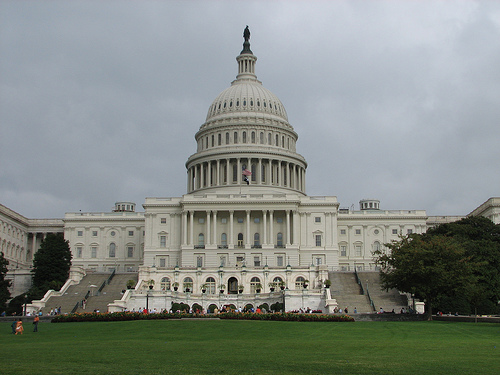
yahoo images

This does not seem to exist in our current Congress, and voters are fed up.  The House’s recent approval of legislation that would strip protection from young undocumented immigrants, whom president Obama has tried to shield with a two-year deferral, embodies the worst kind of partisanship. The bill was added to a Homeland Security Appropriations Bill, a nasty move by Rep. Steve King (R, Iowa) and other Republicans  who act on personal animosity toward the president rather than the common good (David Grant in Christian Science Monitor, Yahoo, June 6, 2013).    

No wonder Congress’ approval rating is in the sewer according to recent polls.  Our national legislative body seems unable to step up to the shared goal of doing what’s best for the country as a whole.     

No respect, no civility, no ability to act beyond self-interested partisanship. Almost 67% of legislators get failing grades for their performance, or lack of it (Huffpost, 5 June 2013).  Squabbles over student loans, payroll tax extensions, immigration reform, a Farm Bill reauthorization that will cut food stamps while giving price supports to super wealthy agribusinesses--the list goes on and on. People are disgusted with the antics of legislators such as Reps. Darrell Issa (R, CA), Steve King (R, IA), Bob Goodlatte (R, Va), and Ohio's own John Boehner, the House majority leader who regularly fails to demonstrate the wisdom and temperance of leadership.   Oh for legislators who rose to the capabilities and compassion of Abe Lincoln as portrayed in Spielberg's film..  

Does Congress symbolize the state of mind of our country today, troubled, angry, and mean-spirited?  Or does it create its own reality through the antics of individual legislators tossed into a seething cauldron of partisanship without a sense of the common good? 

What would Alexis deToqueville think about our democracy today?  Would the French observer of the birth of our democratic institutions find the Congress as shameful and discouraging as the majority of Americans?  

Should we add to the current sad state of our governance the NSA’s intrusive wiretapping?  Has the vision of “Big Brother” in the movie Enemy of the State, with Will Smith and Gene Hackman, become a reality show? Did Obama know the extent of it? Is he able to address and fix it, or risk losing the confidence of voters?  

“We the people.” The common good. Honesty and transparency. Justice and wise leadership. Are our elected officials able to rise up and restore the principles that are the foundations of our democracy? Are "We the People?” 

Tuesday, June 4, 2013

Toledo's Old West End


Our old house on Robinwood (center), now painted yellow, green and white;
other houses, neighbors, my grandsons, and landscapes.
The Old West End (OWE) in Toledo, Ohio, is an historic neighborhood of beautiful Victorian and early 20th- century homes in a variety of  architectural styles. Beautiful trees, yards, gardens, parks and landscapes surround the grand homes and mansions, designed by the great architects of the day and once inhabited by Toledo's wealthy elite.  The people who live there now form a community of souls that care about the place. My kids grew up there, as did many of their friends, close to this day.  The OWE creates bonds of friendship that last forever.

This year the Festival celebrated its 42nd year of showing off the historic urban neighborhood that is anchored by the renowned Toledo Museum of Art.  The house tours are a fabulous way to get a close-up look at the architectural details of the homes, lovingly preserved and maintained. In fact the Festival began as a way to ensure that the neighborhood was, indeed, preserved, especially after some historic houses were torn down in the 1960s.  The neighborhood had slipped for a while;  many houses stood neglected and forlorn. But urban pioneers moved in to save the homes and restore the neighborhood to its original glory.  They then created the OWE Festival to open their homes to public view.   “The OWE is a great place to live,” they proclaimed!

The architecture ranges from Victorian and Shingle style, with lots of exterior “gingerbread” designs; to large Craftsman homes with Art Deco features;  English Tudor, Spanish Mission style, and Italian Renaissance mansions;  Flemish Gothic and Romanesque styles.  High ceilings; mahogany, cherry, and fabulous woodwork; stained glass, leaded glass, Tiffany windows;  fabulous fireplaces; tall solid wood doors, wrap-around porches, hand-carved decorative features inside and out; and craftsmanship that hardly exists nowadays. .

“They don’t build houses like this anymore,” my friend Teddy says as we walk up Robinwood Avenue and past our old family homes.  We lived diagonally across the street from each other. We both live elsewhere now, but the Old West End is always a special place to us, and to anyone who has ever lived there. “I loved my house,” Teddy and I say almost simultaneously. 

The OWE festival also includes a parade, art fair, neighborhood lawn and garage sales, and food, poetry and music in Agnes Jackson Park. 

That park also brings back wonderful memories.  An old hospital once occupied the large lot. The park was created in the early 1980s by University of Toledo math professor Robert Jackson in honor of his wife Agnes, a Vassar graduate, who gave so much to our neighborhood, the community, the city as a whole.  The Jacksons' spirit still floats around the old haunts as we stroll down memory lane. 

Thursday, May 30, 2013

Spielberg's Lincoln: A great character study (even if the history is flawed)

Spielberg's Lincoln
 www.showbiznest.com

I finally saw Steven Spielberg’s Lincoln.  It’s a great movie, with fantastic acting, as everyone in the world knows. I love Daniel Day-Lewis’s portrayal of the president. So compelling and moving, almost eerie.

On one hand, I can see why many historians, like the Pulitzer prize- winning scholar Eric Foner, have taken issue with the film. It's not considered "great history," or even "good history."

On the other hand, I see it as a great character study, a masterpiece. Millions of people have seen the film, commercially very successful even though it is heavier on dialogue than action. These are viewers who for the most part don't read Eric Foner or the hundreds of history books written about the Civil War, a vast historiography over time.  

With this in mind, and coming into the picture a little late, as it were, I'd like to add a few points to the story. First of all, president Lincoln in reality was not as singly focused on the 13th amendment at the time as the movie portrays. He brought all his oratorical and persuasive skills to bear on its behalf, but military strategy took precedence.

Afterall, Sherman was marching through the South destroying everything in his path, a "total war" strategy approved by Lincoln.  Slaves followed Sherman in droves across Georgia to the sea, hoping for "40 acres and a mule," their dream of freedom.   Events were fast moving toward Appomattox, with General Ulysses Grant planning his final battle and preparing for Robert E. Lee's surrender, the friends from West Point in a scenario they could not have imagined as young men.  Slaves were fleeing plantations or taking them over, declaring their own freedom, not waiting for the president or Congress to act. Congress was in a lame-duck session, a sideshow really to more important events, playing political games that were more limited in their scope than they seemed, but providing a colorful cast of characters (all men) for a movie.   

I understand. Speilberg's Lincoln doesn't attempt to present a history of the 13th amendment, or the Civil War. It's a study of political leadership under the most trying of times. It focuses on the meaning of the Civil War, which was about freedom.  On this level, it's a brilliant and fascinating study.     .

yahoo image
The real social history is equally fascinating. Lincoln was not the author of the 13th amendment, or even its chief advocate. That honor belongs to women abolitionists such as Lucy Stone, the Grimke sisters, Lucretia Mott, Susan B. Anthony and Elizabeth Cady Stanton in cahoots with Senator Charles Sumner, who introduced the anti-slavery amendment into Congress in 1863.  

The women didn't stop there. They founded the National Women's Loyal League to organize a petition campaign to ensure its passage. Imagine! Under the leadership of the indefatiguable Susan B. Anthony and Elizabeth Cady Stanton, two of America' greatest civil rights reformers, intellects, and activists, the Loyal League gathered 400,000 signatures in 15 months, an incredible feat then, as now.  If anyone has tried to get names on a petition, pre-internet age, you''ll know what this means!

On February 9, 1864, according to Eleanor Flexner in Century of Struggle, her classic study of women's suffrage, two freemen, tall and stately, symbolic figures, "carried enormous bundles made up of petition rolls into the Senate Chamber and placed them on the desk of the Senator from Massachusetts."  It was a dramatic moment. The women who did the work for the 13th amendment, who did not even have the vote at the time, watched silently.  Sumner rose to speak 
"Mr. President, I offer a petition which is now lying on the desk before me.  It is too bulky for me to take up.  I need not add that it is too bulky for any of the pages of this body to carry....It will be perceived that the petition is in rolls.  Each roll represents a state.  For instance here is New York, with a list of 17,000...and Massachusetts with 11,700....These petitions are from all parts of the country and every condition of life....Here they are, representing a mighty army...the advance guard of a yet larger army.” (Flexner, 104)

And, indeed, the "larger army" is the real story:    
*An army of abolitionists and reformers who spoke out before, during and after the War.
*An army of women who fought for freedom for slaves and discovered they needed to fight for their own as well, creating a women's suffrage movement.
*An army of slaves who defied servitude, joined the Union army, put freedom on the war's agenda, fled farms and plantations to seek out family members, and played a central role in their own emancipation.
*The larger army of people, movements, and grassroots reform that together created the multi-layered process necessary for social change.
*The mighty army, including 4 million freed people in the South, that then carried the process forward, beyond the turbulent Reconstruction years, beyond the Black Codes and massive injustice, and into the 20th century and the rebirth of the Civil Rights movement in the 1960s. 

Of course, the complex history of the transition from slavery to freedom cannot be told in a two-hour commercial movie.  Ken Burns tried to tell it in an 11-hours documentary series, which took 6 years to make, aired on public television for five consecutive nights in 1990, was viewed by 40 million people (the largest audience ever for a PBS program), and led to hundreds of educational programs. The Burns documentary, moreover, was based on the latest scholarship available, making it a remarkable achievement in bringing historical scholarship to large public audiences.  

Spielberg's character study of Lincoln compliments Burns' documentary.

Sometimes it’s better to get history in small doses, and in popular formats.   It reaches more people.  Historians can use the opportunities to add their voices.  In that sense, Lincoln the film is an important slice of history that provides insight into the character of a great president. Viewers can't help but come away from this movie with a sense of the meaning of the Civil War--a heroic struggle for freedom on many levels--and a grand model of the kind of president America needs, then, now, and always.


Tuesday, May 28, 2013

Rutherford B. Hayes House and Museum & Maumee Bay State Park: More Food for Seniors' Souls

The Hayes house and grounds; signage and educational panels feature issues like native Americans, the Civil War, and the War of 1812 (also a temporary exhibit is up now); a tattered flag of the 23rd Ohio Civil War Regiment; cameo of Hayes.   
A group of devotees of the Lourdes University Lifelong Learning program took a two-hour bus trip to the Rutherford B. Hayes House and Museum in Fremont, Ohio, then went to Maumee Bay State Park for lunch and a visit to the Nature Center.  They are both beautiful natural environments. The threat of rain and cloudy skies did not diminish the adventure. 


I’m an historian but I never paid much attention to the presidency of Rutherford B. Hayes.  I knew the 1877 presidential election was hotly contested and that Hayes became president by one vote of a select Electorial Commission in exchange for withdrawing federal troops from the defeated South, thereby ending Reconstruction and strangling the hopes of 4 million newly freed people.  The former slaves were left to their own mercies under the gross unmitigated injustices and cruelties of Southern white losers and haters, the consequences of which were felt for over 100 years and are still felt to this day in spite of changes in race relations and laws. 

But I learned that Hayes, an Ohio-born lawyer, was an honest and decent man, anti-slavery, a Civil War veteran, a friend of Abe Lincoln’s.  He married Lucy Hayes, an advocate for women’s education (not suffrage, however) and fervent prohibitionist (no liquor at the White House, to the dismay of contemporaries at the time). They had eight children, two of whom died early and others who lived to further the Hayes' legacy, founding the first presidential Museum in the country.  Hayes' heirs remain active in keeping his memory alive; several have served on the museum board of trustees, and do to this day.  The museum houses collections of significant leaders of Fremont, Sandusky, Lake Erie Islands and area; manuscripts and research papers of historians like Roger Long and Charles E. Frohman; hundreds of photographs, artifacts and memorabilia (including a pair of Lincoln's slippers replicated for Stephen Spielburg's  Lincoln   (www.historypin.com/channels/view/id/13618491).  It’s a great museum.  

The house, "Spiegel Grove," which the Hayes expanded to 31 rooms over the years and which has been restored to its former Gilded Age splendor in every detail, was interesting, reflecting its owners’ special interests and also the times. The parlors and dining room are grand.  The old-fashioned floor-to-ceiling library holds hard-covered series and precious collected works of Shakespeare, Thackery, Twain, European and American classics, presidential papers.  "They don't have libraries like this anymore," we murmured to each other in awe.  I must say the wallpaper and furnishings are also amazing.  

"I would like to think that if President and Mrs Hayes surprised us and returned to Spiegel Grove, they would find their rooms just as they left them 125 years ago," said Gail Caskey Winkler, the project consultant on the restoration (2012 Annual Report). 

Rutherford Hayes had said he would serve one term as president; he held to that promise. Actually, after four years he was more eager than ever to leave the distasteful political arena to others  “He serves his party best, who serves the nation,” he said in his inaugural addresses.  And he meant it.  He was sick at heart of the partisan politics that ruled Washington, at least as bad as today, maybe worse.  He favored civil service reform, fairness for former slaves, assimilation of native Americans; he was a moderate in all things.  He didn’t get very far in accomplishing his agenda.  

With the triumph of an exhuberant capitalism after the Civil War, the divisions in America grew worse not better as the 19th century turned into the 20th.   Hayes came to believe that the major issue confronting the nation was the growing gap between the very rich and the poor.  Until his death in 1893, he feared this gap would destroy the country if it was not acknowledged and addressed.  We all know how long this took, how reform efforts grew to tinker with it, how, in fact, it is still for many Americans a number 1 issue.  I have a renewed respect for President Rutherford Hayes.  


---------------------------------------------------------------------------------------------------------


Maumee Bay State Park.
After reflecting on such somber issues, we headed to the Maumee Bay State Park. The skies turned  dark, the rain fell, but the park looked lovely in a misty haze.  The birds were in their glory. I loved the nature center; it reminded me of my brother Loren and all the nature centers we had visited together over the years: in Tallahassee and all over Florida; from Florida to upstate New York and New England, and dozens of local, state and national parks in between; those in Amsterdam and Costa Rica; in the American southwest, the Grand Canyon, and Utah.  America the Beautiful, through Loren's eyes.  The America Loren loved and fought all his life to preserve and conserve. I stopped to read about the Great Blue Herons, the flowers and trees, the monarch butterflies (threatened), even swamp snakes that Loren (not me or Andy) found fascinating.  Loren was with me.

Then I saw the quote from an Indian chief, Big Thunder: "The Great Spirit is our Father, but the Earth is Our Mother."  Loren nudged me.  Truth is, he said, "The Great Spirit is our Mother, and the Earth is our mother."  

I walked through Maumee Bay State Park with Loren and it restored my soul.

So do these excursions and adventures sponsored by Lourdes' Lifelong Learning, ably organized and led by acting director Lynda Hoffman. There is so much to explore, so much to learn. It's like the quote about aging that says: "Add life to your years, not years to your life!"  Yep, this is the way to go, Loren agreed.  He died while hiking with the Florida Trail Association, along the Aucilla River and nature preserve, died doing what he loved, one with nature every step of the way.  

Friday, May 24, 2013

From large canvases to small ones: My Gardens


Pots on back steps (top left); front garden, porch, pots on front steps; those hearty purple pansies made it through the winter; back garden, back porch (lower half). 

Last week it was art and history; this week it’s my garden.  From funereal statuary and monuments, to archival collections, to Spanish-style architecture and art, to my little gardens. From large canvases to smaller ones.  

I’ve been weeding, digging and planting for weeks.  Most flowers are now in pots or in the ground, mostly perennials--lilies, daisies and hosta, some wild red grasses and pastel Columbine--with some annuals for color.  I start with large pansies in early spring and keep them going as long as possible. Some make it through the summer.  My cheerful purple pansies in the front garden even made it through winter.  I’ve added petunias, geraniums, marigolds, and a few other flowering plants in shades of red, patches of white (which I love in any garden), and also ivy, vines and plants that spill over hanging baskets.  I add whatever large stones I can find around the yard, pieces of pottery, tile and glass, angels and garden art.  Loren's spirit is here too.

Now I am weeding, care-taking, and watering, carefully.  Rain is forecast, and we need it.  There are a few bare spots that need some tall perennials, along the house especially.  Another reason to do one of my favorite things, shopping for plants!  My neighbor Judi and I decided not to grow vegetables this year, so I’ve planted about 1/3rd of that garden plot in back of the house. I might throw wild flower seeds in the rest, see what happens. Maybe they'll bloom next year.  

For now I'm awaiting this year's daisies, day lilies and roses, a variety of them, which are budding and abundant. They'll surprise and delight! Touches of beauty wherever I can sow them. My own little canvases. 

Don't get out the popcorn yet: The Wheels of Justice Grind Slowly

"Delay, Delay, Delay: From pre-trial motions to negotiations over security, the master of legal stalling has many tactics in his arsena...